Payload CMS as a Long-Term Business Safeguard
26 Jan 2026
Choosing a CMS rarely feels like a risky decision - until it becomes one at the worst possible moment. When the original developers leave and the documentation proves more of a sketch than a map, a custom CMS quickly turns into a structure only one person fully understands. What once looked flexible becomes a ceiling you keep bumping into.
Moments like this reveal the real risk: not the technology, but choosing a tool that stops evolving the moment its creators walk away. That’s why more teams are moving toward standardized headless CMS solutions - systems built to stay understandable, maintainable, and scalable over time.
Payload is one of them so we’ll look at how it solves the exact problems custom CMS setups tend to create.
How Payload Approaches the Problem Differently
Payload CMS was built to break exactly that pattern. It sticks to tools the market already knows - and it does so with full transparency. It’s open from top to bottom: full code access, no enterprise traps waiting for you down the line. It leans on familiar foundations:
- Node.js,
- TypeScript,
- Schema-based data modeling,
- REST,
- GraphQL APIs.
No custom templating language or plugin jungle you’ll regret later. Custom CMS setups rarely collapse overnight. They age slowly and awkwardly. People leave and tools change. What starts as a small shortcut eventually sets like concrete. And one day the system you were so proud of stops being flexible. It starts resisting every new idea you try to introduce.
Take Tekton - a hand-tool maker whose custom CMS had grown so patchy and over-engineered that no one wanted to maintain it anymore. Payload gave them a clean, predictable data structure and an admin panel their marketing team could actually work with. It also removed the dependence on one developer who was the only person able to navigate the old system. The new CMS gave them room to tidy up their product catalog, publish faster and stop wasting time fighting with an old CMS that had outgrown itself.
And on the other end of the spectrum you have brands like Mazda - switching to Payload allowed them to cut operational overhead, simplify content workflows, and let their developers focus on building features instead of firefighting a legacy platform.
That’s really the difference. A Payload project is easy to hand over because everything is readable. You open a schema and the logic is there. If you switch agencies or decide to bring development in-house, new engineers don’t need someone to whisper the “unwritten rules” of the system. They can just start.
Predictability Not Flexibility
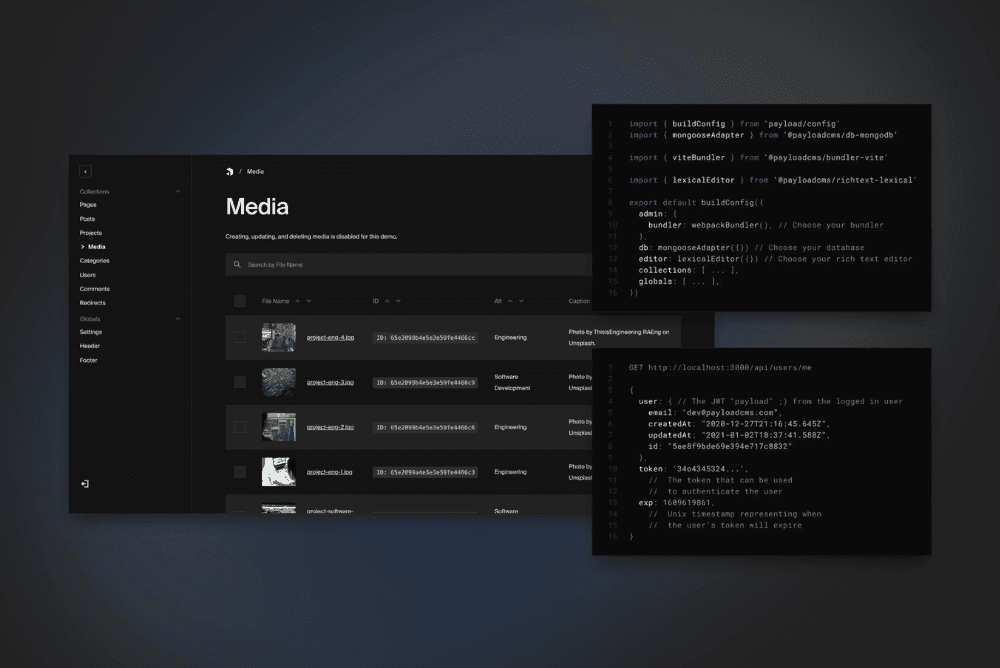
Let’s talk about the admin panel. In most custom systems it becomes a whole second app - part UI, part archaeological site - and it falls out of sync the second the team’s attention moves elsewhere. In Payload the panel is generated directly from your schema. Add a field, it's there. Change validation, the UI reflects it. No parallel codebase. No mismatched expectations.
Costs follow the same pattern. A custom CMS seems manageable but becomes costly once fewer developers are willing to go near it. Payload flips that. It uses skills developers already have, so the hiring pool stays wide and sane. And since you can self-host wherever you want (cloud, containers, anything) you avoid the slow creep of SaaS pricing altogether.
From a strategic perspective, predictability is worth more than people admit out loud. Roadmaps shift and teams reshuffle. Companies grow, stall, pivot. A CMS that forces you to stick with one vendor or rethink the architecture every couple of years becomes a risk all on its own. Payload stays out of the way. Versioning is built-in, the admin panel grows as your data grows, and you’re not trapped in someone else’s philosophy. Flexible, yes. But never controlling.
Freedom Is The Security
People act as if business security begins and ends with uptime and backups. And sure, that matters. But the deeper kind of security is the freedom to make changes without breaking the foundation. It’s worth pausing and asking a few real-world questions:
- If you ever switch agencies, will the new team be able to step in - or will the whole system have to be opened up again?
- When you add new features next year, will they fit in cleanly, or will you end up rebuilding parts of the foundation just to make them work?
- And if a new developer joins, will they understand the setup on day one, or will they inherit a set of unwritten rules no one remembers writing?
With Payload, those problems disappear. And the community matters far more than most teams ever expect it to. With a custom CMS, the moment the original team walks away, you’re on your own. With Payload, things keep moving even when your project takes a pause. You actually see the ecosystem grow instead of freeze. That means:
- documentation that gets clearer instead of going stale,
- new examples and patterns showing up when you need them,
- and real issues being solved out in the open, where everyone benefits. It’s the exact opposite of a dead-end system. You’re never left with a frozen codebase.
All of this fits into a bigger shift in the industry. Companies are walking away from custom CMS builds because long-term lock-in just stops making sense - not because they’re lazy. At some point the cost of maintaining a one-of-a-kind system outweighs the benefit of having it. Headless platforms like Payload give you the flexibility teams need without locking you into a single direction. It’s not about going generic - it’s about keeping your options open.
The Strategic Choice
In the end, choosing Payload isn’t really about picking a CMS. It’s choosing a setup that stays clear, maintainable, and understandable long after the original team moves on. A system that doesn’t box your product into decisions made years earlier or force you into rebuilding things that should have stayed simple. It’s the kind of foundation that lets your product grow without dragging legacy problems behind it. Because you’re not choosing a tool - you’re choosing the environment your product will have to live in for a long time.